
‘Whatever a moon has always meant’: and some more moon names that matter.
The moons have been companion to the Soul Shed project of walking with the trees from its very beginning. But I’ve never been entirely comfortable with how I’ve named them. And names are important.
Names are about relationship. And wonder. They are about calling and about meeting. They describe, and they summon and invoke. They are about drawing a presence nearer and making it distinct.
And, they can be misfitting, and jarring, and offending: About none of the above, or a painful version of it.
This is because names are of relationship, and they are about how we know another.
So, they carry responsibility. In my speaking a name, it makes something explicit of what is between us. Names make things real. So, they can never be neutral. They are the most specific of things.
For me to name the lunar cycles, I need to draw on something true and connecting, so that we can join together beneath a moon, and so that I can convey that the walking with trees is happening under lunar auspices.
Landing in a new place with this has taken me on an interesting journey. while i share it with you, to keep presence to soul connection front and central to the reason for writing it, this post is threaded through with a found poem, collaged from the words of E.E.Cummings1, Molly Remer2, and Rumi3 (translated by Coleman Banks) and paired with images from my SoulCollage® deck.
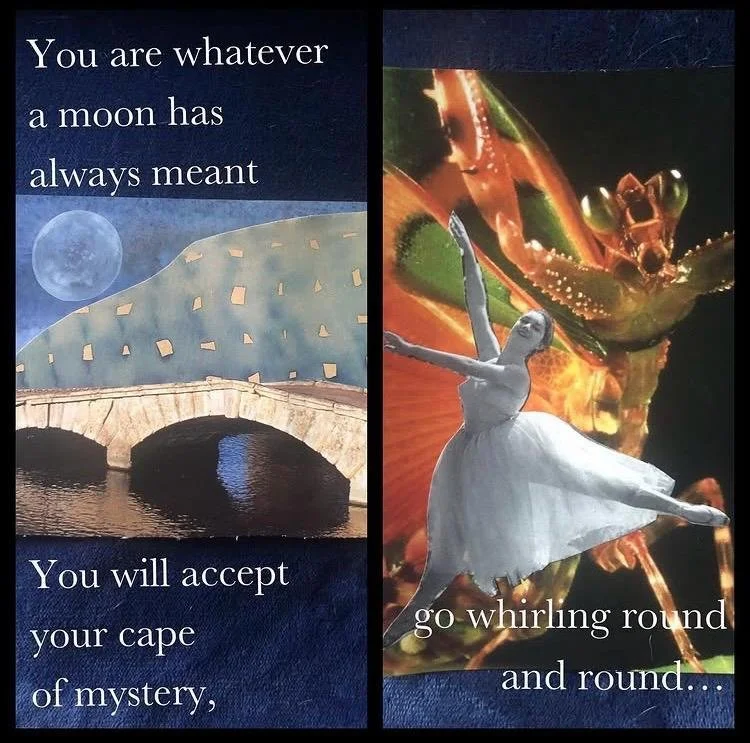
SoulCollage® cards: ‘Whatever a moon has always meant’ and Whirling round and round’
For the ancient Britons that lived on these isles, time was reckoned by lunar months, and months began with the new moon. This is in common with other indigenous cultures, such as the Native Americans. However, their moon names have survived through living language and oral tradition, and have been handed down. While ours are mostly lost, and we are re-imagining them from fragments. However, our druidic and pagan traditions have thrived, even without these certainties, and this is much owed to poets, mystics, and people of the land, and a trust in the perennial inner wisdom stream, that allows a deep well of spiritual knowing to always be available to those who desire to live close to their nature.
As Charles Peguy wrote:"Tout commence en mystique et finit en politique": ‘Everything begins in mysticism and ends in politics’4.
SoulCollage® card: The Moon
I will first turn to the historical and archaeological records.
By about 500 BCE most of western Europe was a network of Celtic speaking societies. These included the peoples of Britain and Ireland alongside communities across much of western Europe. Although they belonged to different kingdoms and tribes, they shared closely related languages and many cultural and spiritual traditions that centred the seasons and the natural world. Trees were very important to these societies, and were part of their rituals and practices and celebrations.
SoulCollage® card: Moon
The strongest evidence for how these societies reckoned time comes from the Coligny Calendar5; a bronze plaque discovered in France in 1897. Dating from around the second century CE, it records a five-year lunisolar calendar made up of 12 lunar months.
There is no surviving British version of this calendar, but many scholars believe that similar calendars may have been used across Celtic regions because of all that they shared.
Unlike the cultures that followed under Roman influence, these traditions were mostly transmitted orally, and through re-enactment rather than written down. Much has been lost, making discoveries like the Coligny Calendar especially precious.
Like many traditional calendars around the world, it followed both the phases of the moon and the cycle of the seasons, keeping the two in relationship.
Just under half of the original calendar remains, in the form of 73 fragments. From these, scholars have attempted to interpret.
The months are generally reconstructed as
November - Samonios
December - Dumannios
January - Riuros
February - Anagantios
March - Ogronnios
April - Cutios
May - Giamonios
June - Simiuisonna
July - Equos
August - Elembivios
September - Edrinios
October - Cantlos
Scholars continue to consider what many of these names mean. Some seem to refer to seasonal qualities or animals (Elembiuios (July-August) as the month of the stag, followed by Edrinios (August-September) which is Old Irish for heat) while others remain mysterious. We are left with fragments rather than certainties.
Modern pagans and druid traditions have responded to these gaps in different ways. Some have reconstructed ceremonies around calendars such as Coligny, while others have drawn more deeply on the Old Irish seasonal festivals:
(Samhain (November) , Imbolc (February), Beltane (May) Lughnasa (August).
These are seasonal markers rather than moon names, and were eventually represented as the wheel of the year, by combining the solstices and equinoxes, and the four cross-quarter festivals.
One of the books that accompanied us at the beginning of this journey of walking with the trees, back in 2020, was ‘The Healing power of trees’, by Sharlyn Hidalgo6. In it she shares the Celtic Tree Calendar, a system inspired by Robert Graves remarkable and controversial work ‘The White Goddess’7. And this Goddess he upholds as our heritage, is lunar.
Graves drew together mythology, medieval Irish traditions, the Ogham alphabet (building on Roderick O’Flaherty in his 1685 text Ogygia) poetry and intuition, into what he called ‘a historical grammar of the language of poetic myth’. Rather than presenting an archaeological reconstruction, he was following another kind of truth: our imagination’s capacity to discover meaningful patterns.
Graves offers Flaherty’s Ogham list of trees as a calendar, and his underlying theme is that Ancient Europe once revered a universal ‘white goddess’; a moon goddess who embodied the cycles of nature.
The Trees:
1. Birch
2. Rowan
3. Ash
4. Alder
5. Willow
6. Hawthorn
7. Oak
8. Holly
9. Hazel
10. Vine
11. Ivy
12. Reed
13. Elder
His calendar has been challenged by historians and practicing druids and pagans alike, yet it has continued to inspire countless people into deeper relationship with the trees and the seasons. Whether or not his historical conclusions can be sustained is less interesting to me than the openings he offered into our nature, inner and outer, and the kind of attention his work invites.
His generosity of imagination is important. Scholarship is only one of the ways that humans make meaning and sense of our experience. As three-centred beings, with heart and creative life force seeking fulfilment, there are always new ways of coming into correspondence with the unfolding world we are part of.
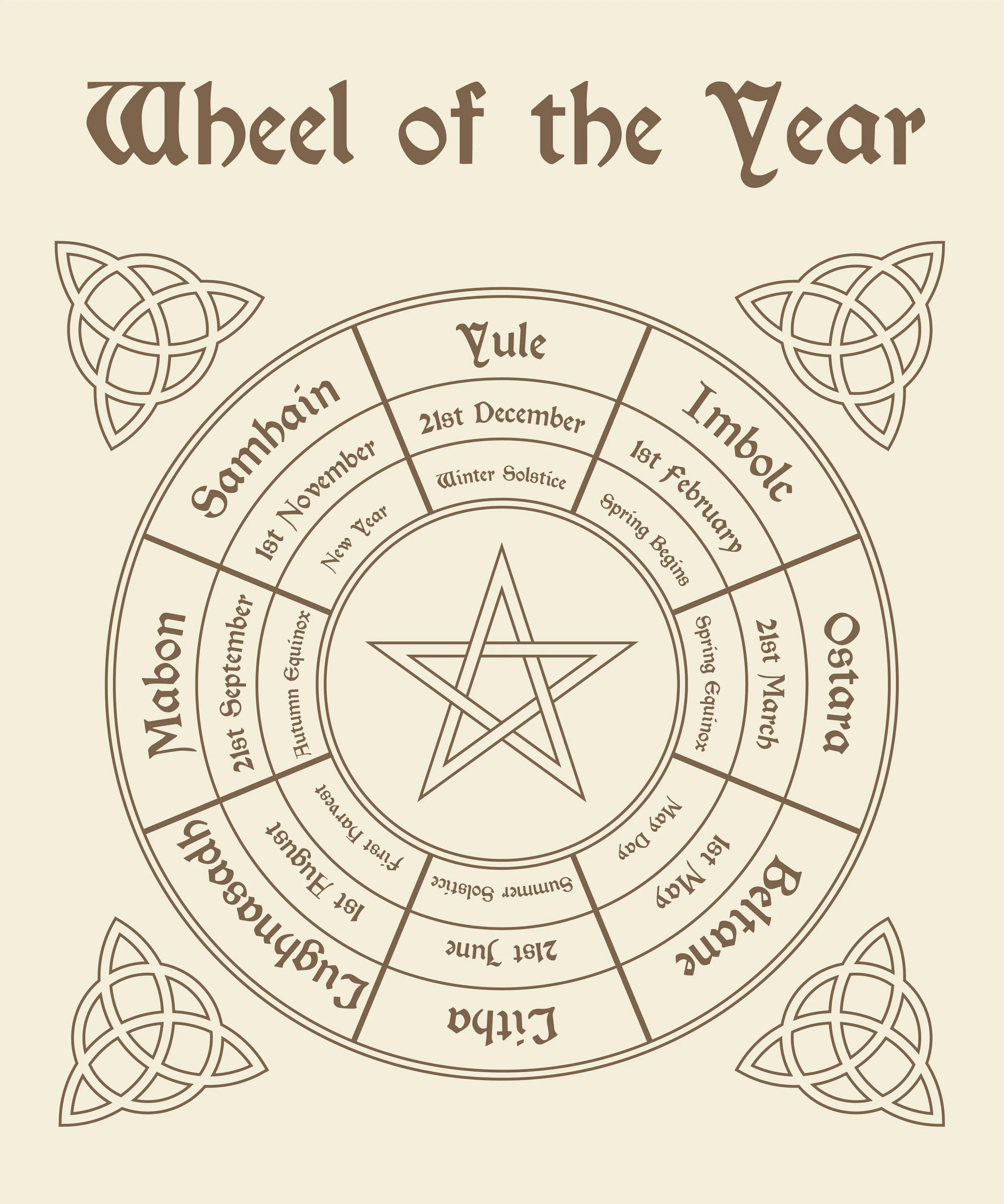
Rendition of the Celtic Wheel of the Year.
In such a way the familiar image of the ‘Celtic wheel of the year’ became more alive for me after in a conversation with my friend Dr Gary Llewelyn, a practicing druid. He shared that while the solstices and the equinoxes are astrologically fixed, the cross-quarter festivals (Imbolc, Beltane, Lughnasa and Samhain) are not - you need to look out for them; to meet them as they arrive. Spring comes when the Snowdrops arrive, not because the calendar says it is the first of February. Beltane belongs with the Hawthorne Blossom, which is celebrated in the garlands of the May Queen, and Lughnasa when the Harvest is in, which is down to the Farmers knowing exactly when the crop is ready. Finally Samhain he explained as the Blood harvest: historically the hard decisions that are taken before winter, based on taking inventory after the harvest, and making judgements as to which animals can be fed over winter, and which need to be killed, since there isn’t enough food for them. These festivals have been closely tied to an agricultural way of life, and met in lived relationship with the land.
What matters here is not fixed names or times, but these frames offering us patterns to support our active participation in seasonal reality.
Walking that Celtic calendar taught us an enormous amount. It slowed us down, and gave us companions for each lunar cycle. We noticed how the lunar energy shifted, and saw the tiny changes in nature that come each day. It was such a powerful way to orient to the presence of the trees in our square miles, around the world. Yet as this project unfolded, I found myself returning less to prescribed correspondences, and more to the trees that actually stepped forward.
As I began recognising the enneagram archetypal energies in the life of particular trees, that relationship gradually became the deeper organising pattern for my own spiritual practice.
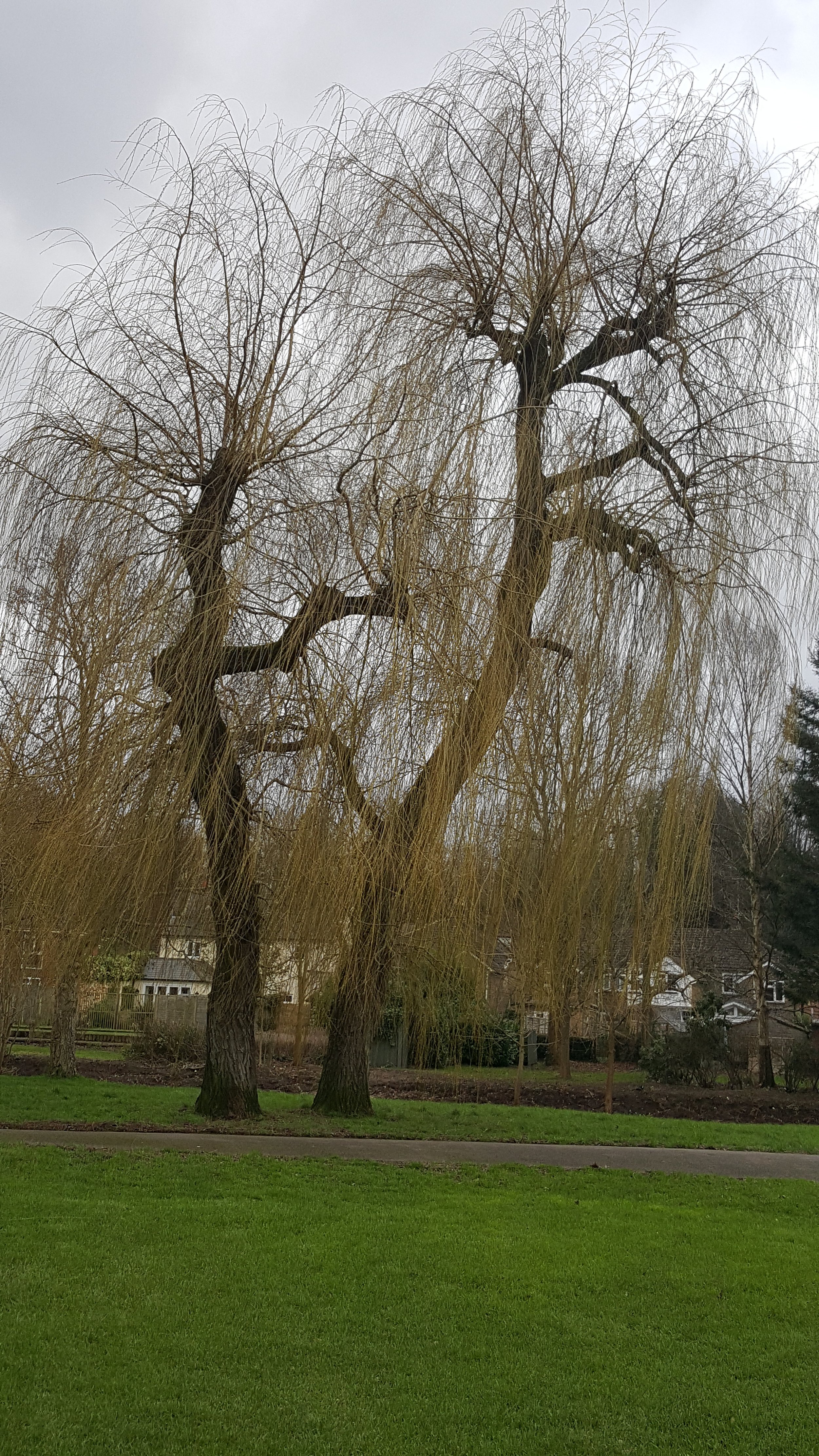
Willow. winter 2020, Farnham, England
Exploring a willow in winter (which is where it appears in the Ogham tree calendar) was evocative in ways that were important to share; and I loved the golden skeletal postures I saw her in, but to walk with willow in early summer in full canopy, was the time when the full expression of the willow 469 piece arrived.
The trees came forward intuitively each time; often as a surprise. Sometimes they were native trees, and sometimes they weren’t, and took effort to find and meet. Olive arrived. Fig arrived. Their appearance wasn’t determined by calendar but by a feeling of been invited imaginally, into encounter. Fidelity to the living relationship was way more important than fidelity to a system.
Following our intuitive kinds of knowing is at the heart of the Soul Shed project, and this is what I imagine was also at the heart of the work of the poet Robert Graves as he followed the spirit that moved him and joined dots to make meanings in new ways.
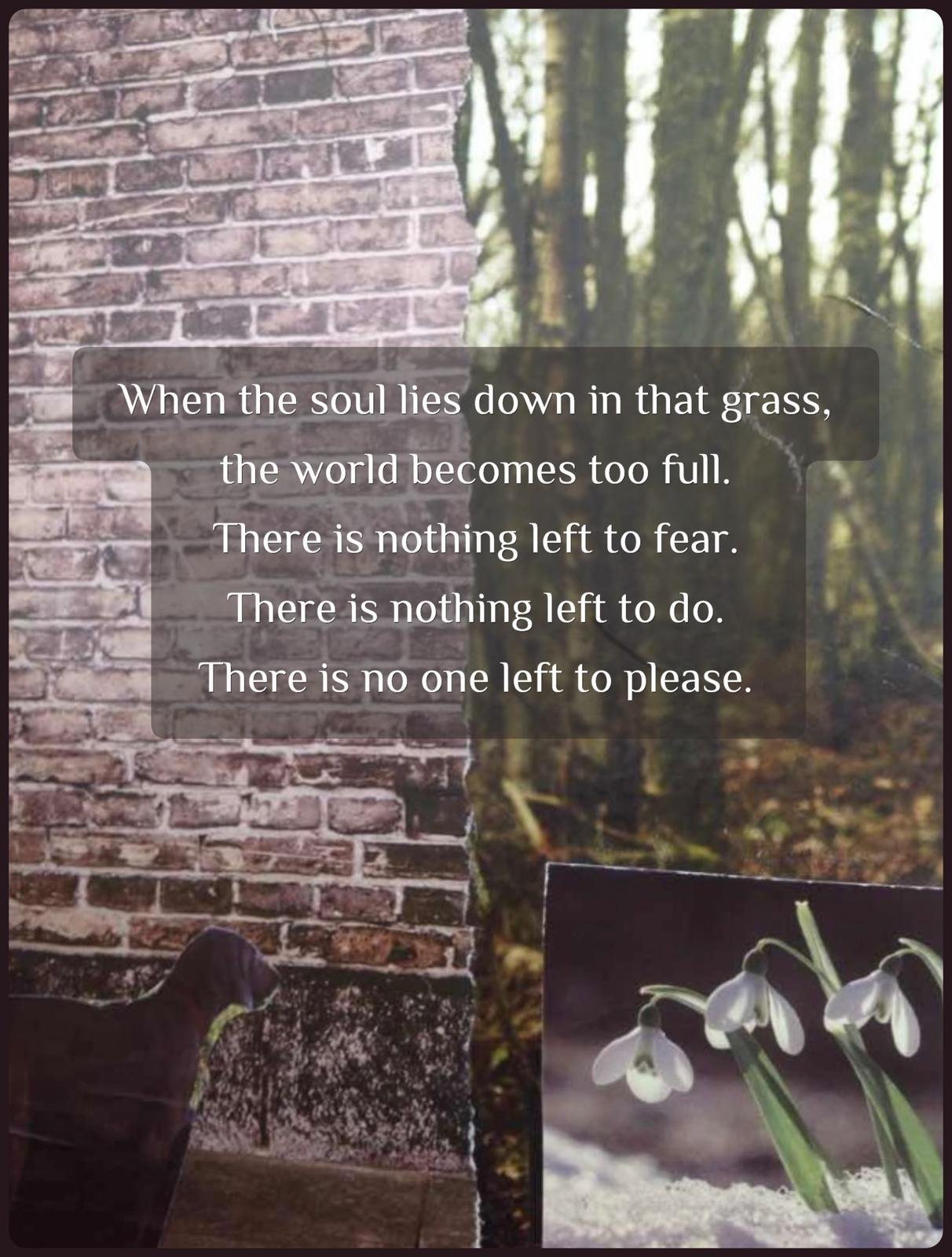
SoulCollage® card: A dogs Journey
I’m sharing all these reference points because it is time to find a new way of meeting with the moon in this project. I’m grateful for the paths that have led here. The wheel of the year, the tree-calendar, the poets, the mystics, and the wisdom carried through living spiritual traditions.
This project is, at heart a simple one, about rooting into a deeper sense of belonging to nature; it is about what happens when we are alive and experiencing nature at our contact boundary. Living in the immediacy of my experience, your experience, and the shared experience that unfolds whenever we stand in presence to a tree.
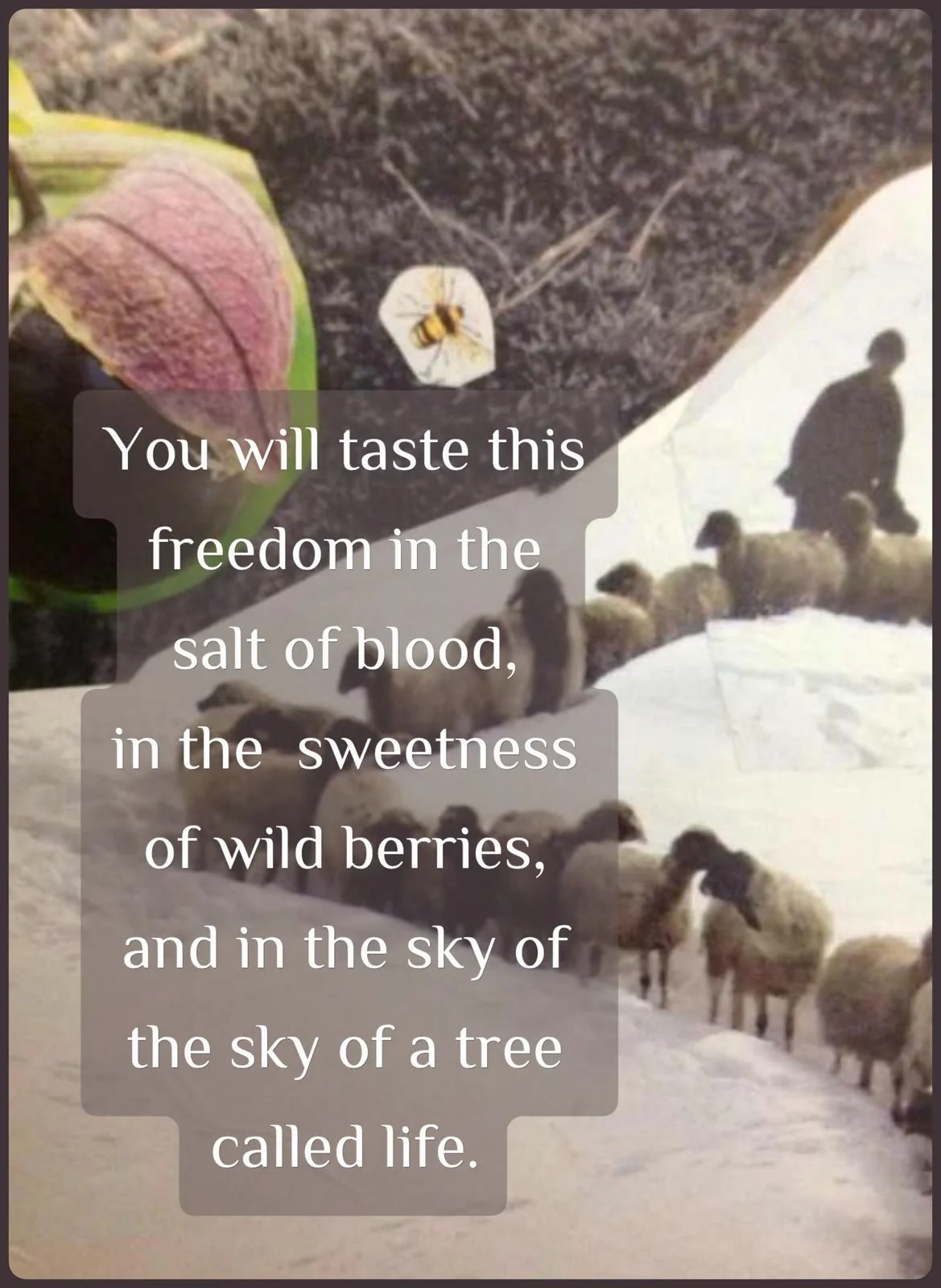
SoulCollage® Shepherding
To continue to use moon names that have not arisen from that living relationship has come to feel incongruent with the spirit of this work.
I don’t want to pretend certainty where there is mystery, or invent carelessly. I would like scholarship, imagination and three-centred, lived experience, to stay in conversation with one another. To receive what has been handed down, but to keep on listening to the land and to the seasons as they arrive.
So, I would love to offer these moon names. They are not ancient names rediscovered, or reconstructed Celtic names. They are simply names that have grown from my time walking with the trees through the seasons of this land, and listening for the rhythms that return each year. What are the trees doing at this time?
They are offered as companions, and I will be sharing them more in my work on here. Here in England, I situate us as about to come into the moon of fruiting, and the new moon comes tonight, the 14th July.
1 Moon of Resting
2 Moon of Waiting
3 Moon of First Sap rising - Spring
4 Moon of Unfurling
5 Moon of Blossom
6 Moon of Pollinating
7 Moon of Shading - High Summer
8 Moon of Fruiting
9 Moon of Ripening
10 Moon of Shared Harvest - Early Autumn
11 Moon of Letting go -
12 Moon of Rooting and Rotting
13 Moon of Evergreen - Winter
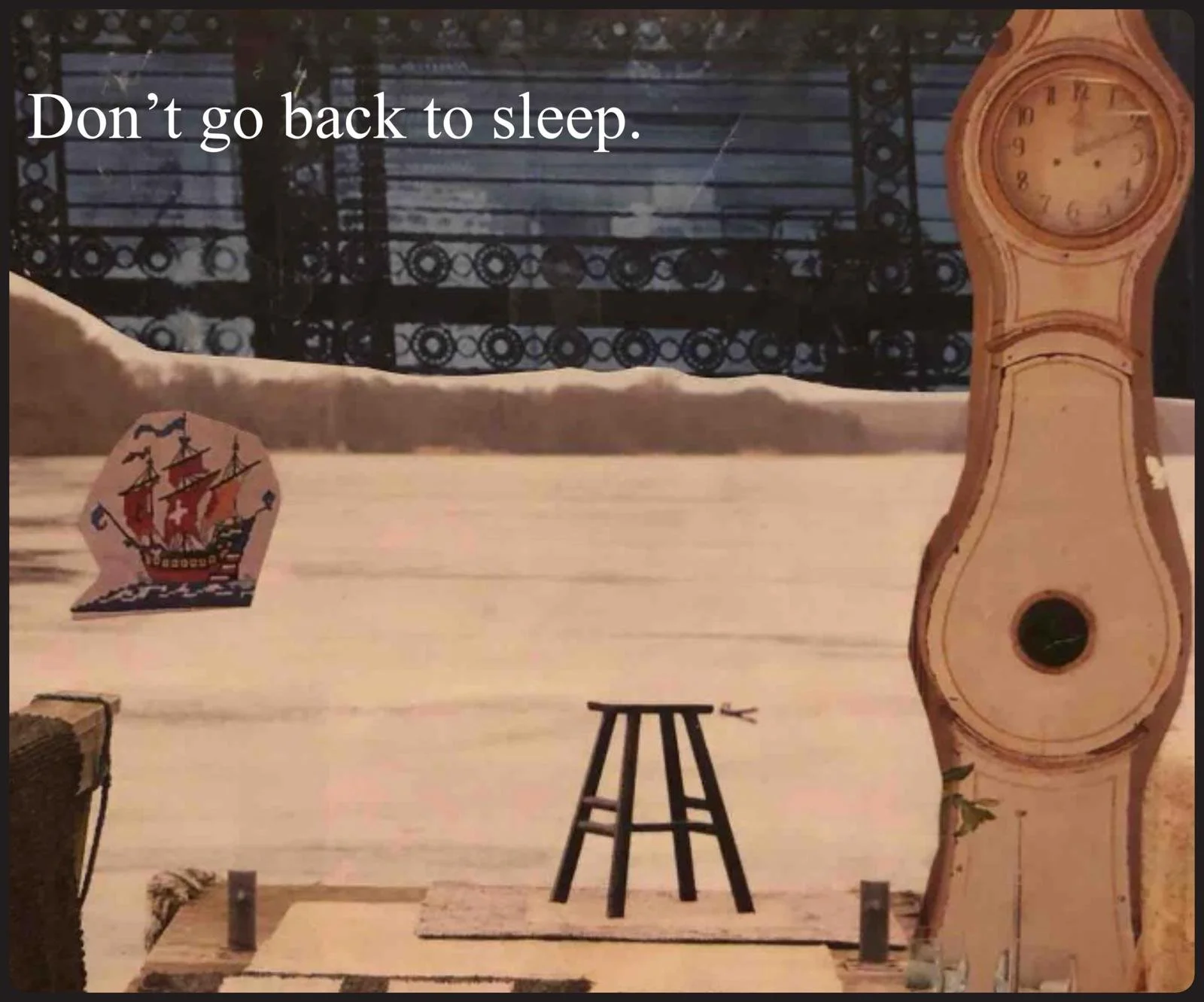
SoulCollage® card: Soul Essence.
‘My knees surrendered to the earth,
From the held back to the free,
Where you make your own sweet tales of growth and great elation.
It took me so long to open the eyes of my eyes,
Embrace the heart of my heart.
Don’t go back to sleep.’
I’m glad you are here in this gentle and curious community. These posts eat up time! To support and help me sustain this part of work, consider becoming a free or paid subscriber.
Notes and references.
E.E.Cummings. words from ‘[i carry your heart with me(i carry it in].’ Poetry. Vol 80. no.3. June 1952
Inanna’s Ascent. 2018. words from Molly Remer. ‘Inanna Speaks.’ CreateSpace Independent Publishing Platform
Words from Rumi, Translated by Coleman Banks. ‘A Great Wagon.’. The Essential Rumi. 1995
Charles Peguy. Notre Jeunesse. 1910.
Coligny Calendar source: wikipedia
Sharlyn Hidalgo. The Healing Power of Trees. 2010. Llewelyn Publications
Robert Graves. The White Goddess. a historical grammar of poetic myth. 1948