
“To see the human in you”. Willow. Enneagram 469
Exploring correspondences and openings for an inner journey with trees and this enneagram archetypal pattern.
If you do a search for the goddess Guanyin, Boddhisvita and god/goddess of compassion, they will often appear holding a willow branch in their right hand. I wanted to show you a wonderful painting I found of this.1 For its joyous innocence, and also for the little extra person (easily missed!) also holding some foliage and the full willow tree, both depicted on the right-handside of Guanyin.
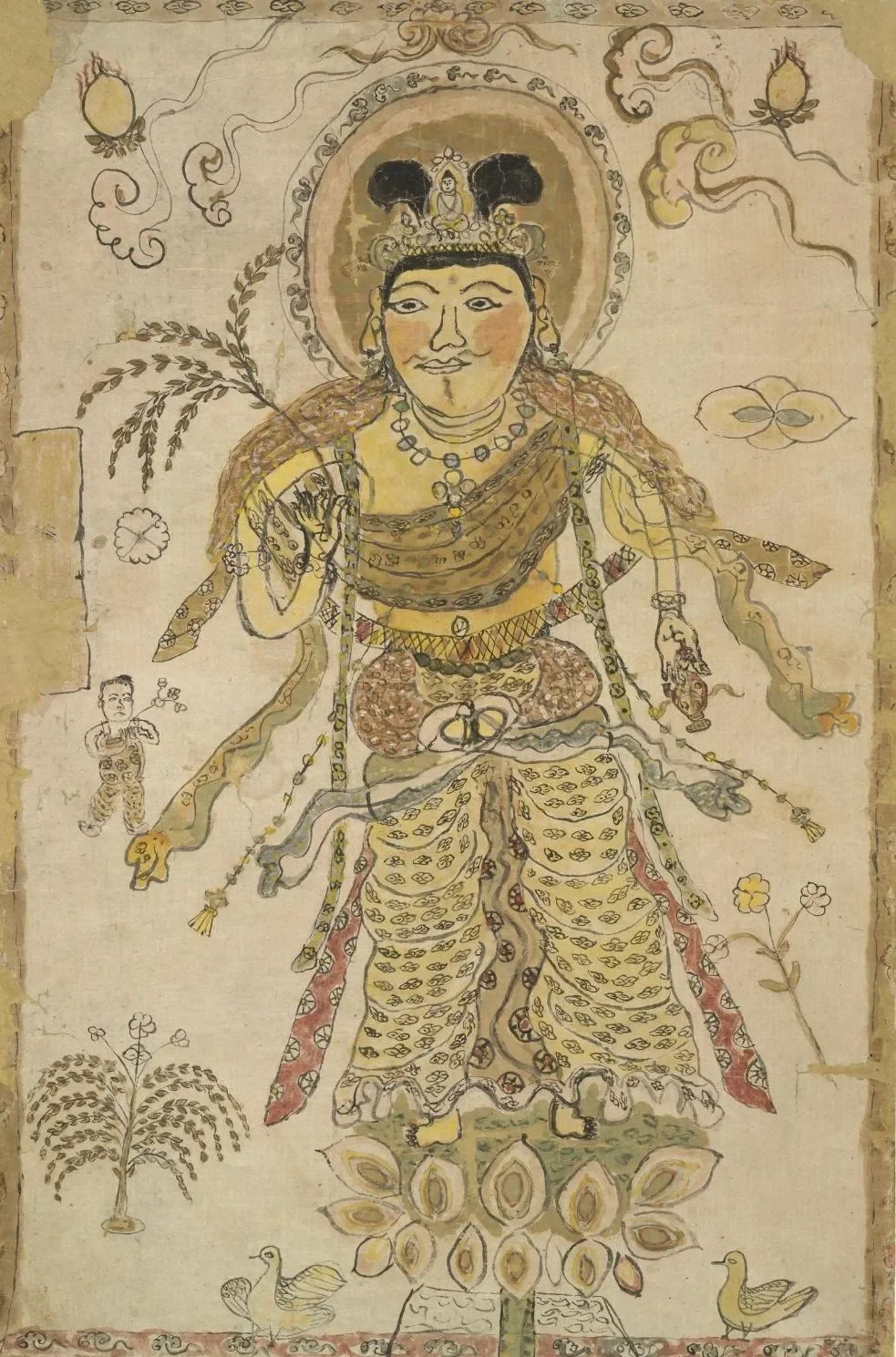
Chinese painting of Guanyin on lotus flower, c. 850 with willow branch
This post is part of a series drawing on the wisdom of trees and the enneagram symbol, to understand the patterns of our human survival strategies. In it I explore ways that these other living beings mirror presence to humans and are richly embedded in cultural ways we have held our own corresponding experience.
Each month I’m building on an understanding of how knowing our three centred human patterns (tritype) might help us heal, so that these patterns can become more than mere survival strategies.
Part of this exploring is spending time in nature and getting to know the habits and habitats of the trees, and another important part is talking to humans walking with the patterns, in different human landscapes around the world, to better understand what it is like from the inside.
This month is the turn of Willow and tritype 946.2
Tree: Willow
Moon: Flower moon, Strawberry moon
Archetype: Enneagram 946 – The seeker of compassion. Also ‘The Seeker’, (Katherine Fauvre). 964, 469, 496, 649, 694
Virtues: Right Action (9), Equanimity (4) Courage (6)
Holy ideas: holy Love (9) holy Origin (4) holy faith (6)
Some rings of fire: self-remembering, being ordinary, fear itself.
The willow is often imagined by children, poets and those needing a moment of withdrawal, as a secret sanctuary space. When we are within, the canopy of willow creates a curtain between us and the outside world, and this magical experience is often deepened by the sound of birds and running water. There is a softness and receptivity about Willow that creates a safe kind of holding environment.
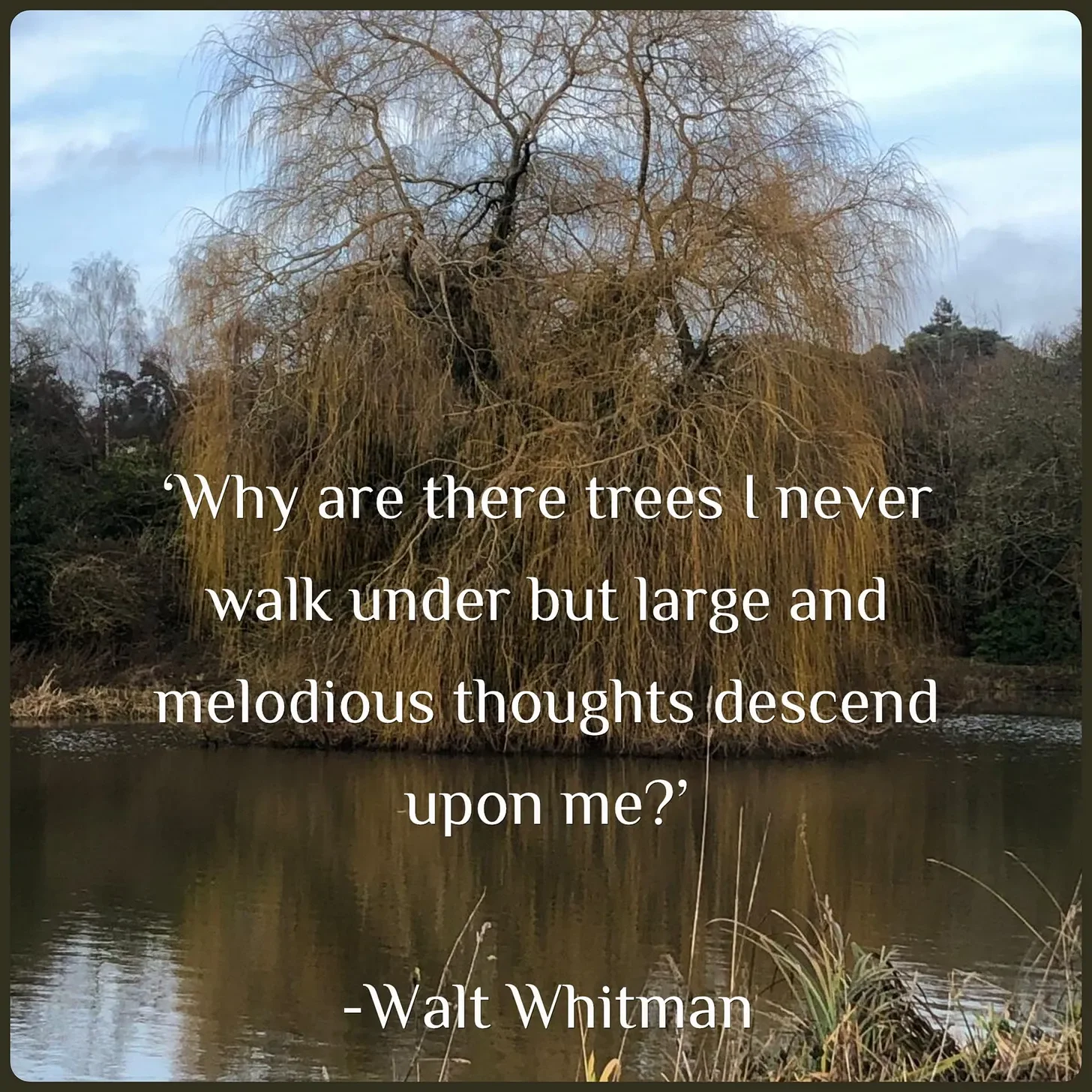
White willow, Salix Alba, Hampshire.
Willows love to live near water, and their favourite places to live are by lakesides and river banks, in wetlands and on floodplains. This tree seeks out these watery pockets. and humans have sought out willows as sanctuary places, where shade and safety can be experienced, out of the harsh sun, and close to the flow of water.
The willow genus Salix is biologically adapted to liminal environments: riverbanks, floodplains, and other edge habitats where conditions are inherently unstable and ever-changing. Its flexibility and tendency to seek out water are not simply aesthetic qualities, but vital survival strategies that also serve a wider ecological function, helping to stabilise soil, prevent erosion, and create habitats for other life. In this way, the willow embodies a form of resilience that does not resist instability but rather lives in a dynamic relationship with it. This mirrors the idea of compassion not as something formed in spite of difficulty, but as a capacity that is shaped through sustained contact with it.
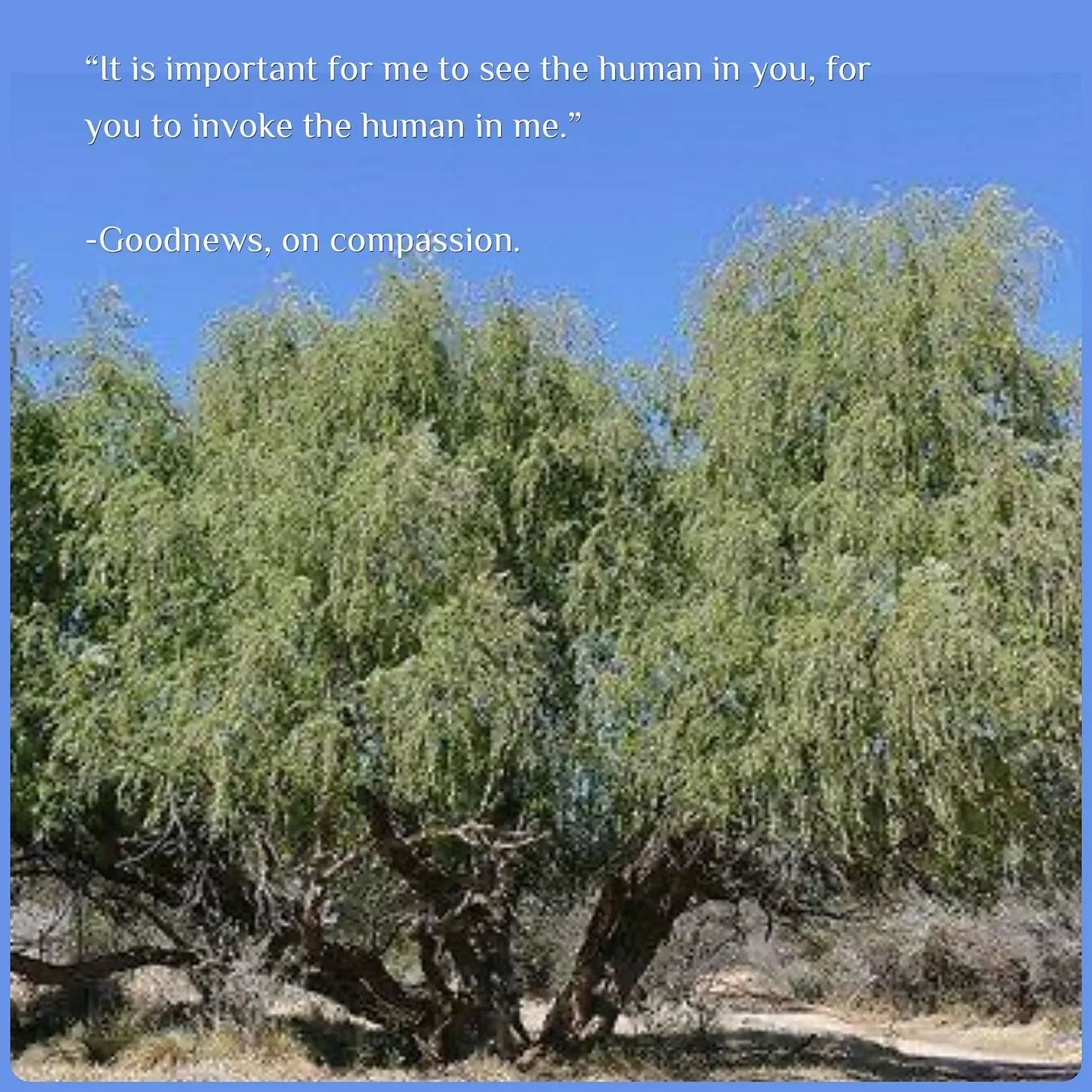
African Willow, Salix Mucronata, South Africa.
Around our world there are about 400 kinds of willow tree that are of the genus salix.
Each of these trees will also have had earlier local names, long before botany was a thing, given by local peoples in their respective languages.
In china, weeping willow is known as 垂柳 (chuí liǔ), the drooping willow. This is the willow that Guanyin is holding and the tree painted to her right.
The Cape willow,pictured above, native to South Africa, and other countries further north, is also known as Safsaf, an arabic name which dates back to eastern meditterenean cultural influences via old trading routes.
The Celts called willow Saille, pronounced Sal-yuh and I love how this rolls out of the mouth softly, and evokes sounds of wind and water.
Here is chuí liǔ again, on the popular 18th century willow pattern pottery that helped to make the weeping willow such an iconic tree :
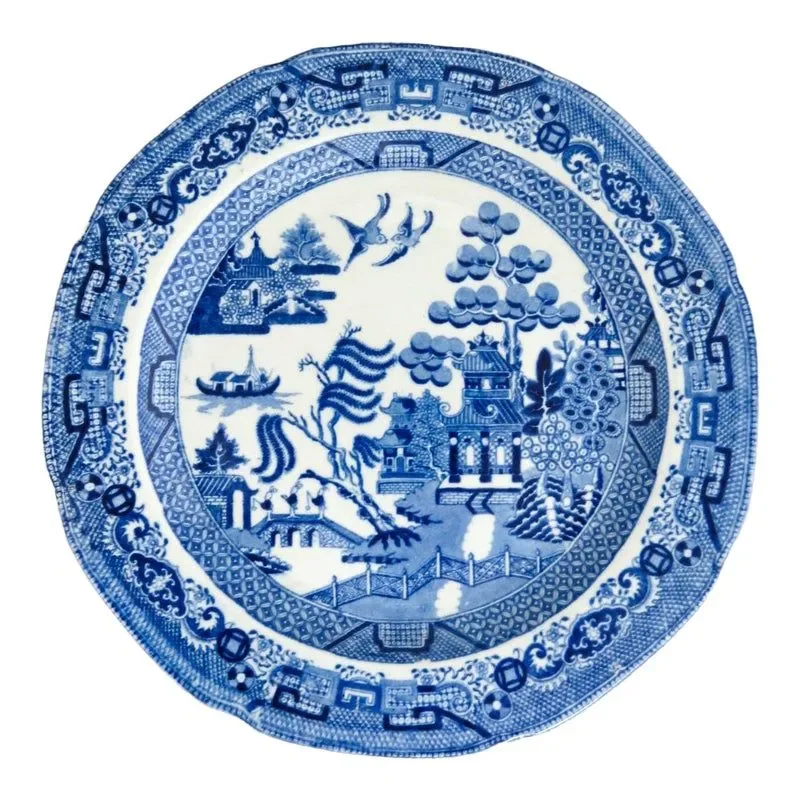
Willow-pattern plate from 18th century
The compassion of willow can also be seen as embedded in its chemical make-up which relieves suffering. On each continent, humans discovered the healing properties in their respective willow trees. Willow bark contains compunds including Salycin with effects similar to aspirin, and for thousands of years, before botany and empirical science, willow-bark and leaves wereb being used to make compresses and infusions for local wound care, for calming fevers, and for reducing inflammation.
Humans in a healing role have been using willow to tend one another’s physical wounds for a very long time. The picture of Guanyin at the beginning of this piece predates the birth of Christ by around 850 years.
Compassion is not a single trait but a kind of braided set of capacities that offers another human an experience of being met, seen and understood on a deep level.
The English word compassion comes from the Latin term compassio, built from ‘com’ (meaning with, together) and passio (meaning suffering, from the word pati, to suffer).
So, its original sense is literally “to suffer with.”
Compassion is at the heart of 946 space because each of these survival strategies has developed a particular set of capacities that in combination, make it (in my view) the human personality archetype most capable of suffering with another.
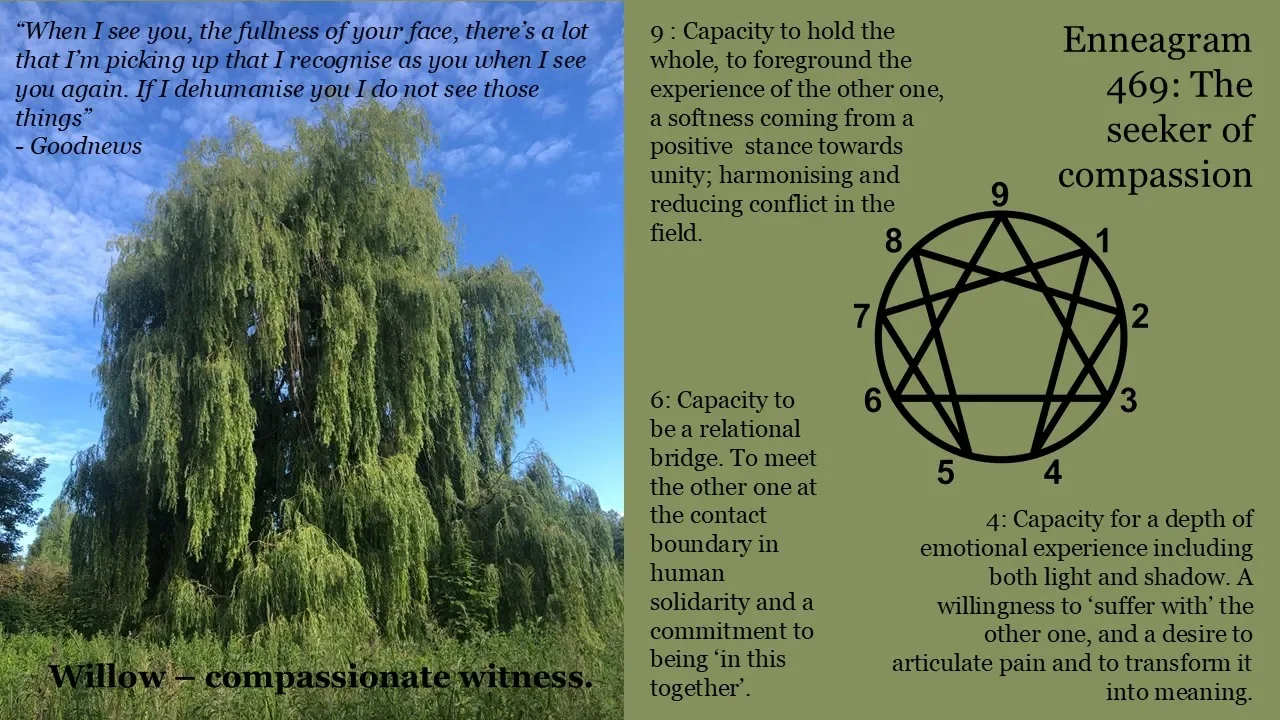
Enneagram 469
I am indebted in all of these correspondence between tritype® and trees, to the research of Katherine Fauvre3. She calls this 469 archetypal pattern ‘the seeker’.
I have got into the habit of beginning with the body type, followed by the heart type, and followed by the head, since i believe that the trees correspond with us in that order: first meeting us in the solidity of their presence, and then connecting with us through our hearts if we are open, and finally offering inspiration through our minds.
I see the human walking with this tritype as a seeker of something specific: compassion, and the willow tree as a mirror for this : a compassionate witness. It is as though the tree is embodying a capacity to mirror back the virtues and the holy ideas of the 946:
Right action, courage, and equanimity.
Holy love, holy faith, holy origin.
This month I was fortunate to meet with Goodnews, an executive coach living in Pretoria, South Africa and a serious student of the enneagram doing his own inner work at 694. Compassion is something that Goodnews has given a lot of thought, as someone who has lived through political struggle of apartheid in South Africa and the impact it has had on peoples’ humanity. He has Tonga heritage, from Malawi, from Usisya village in Nkhata Bay. As we explore the archetype of the seeker of compassion, I will share some of his thoughts.
To get to a place of being able to treat oneself and other human beings with compassion the journey of the 946 is one of self-remembering, learning equanimity, and taking courage.
The enneagram nine embodies acceptance of others. This is a trait that often draws others to them. However, it can be a costly stance because to accept others the nine often forgets themselves.
With the nine style comes a deep abiding aspiration towards unity. In naming the heart wounds, Russ Hudson described the nine hearts as ‘shattered’, and my friend Rob shares that there is a foundational sense in nine of being born being a profoundly disturbing experience. To tolerate this nones often numb out to their own immediate experience. The nine imagines this pain of existence itself is something others carry too, meaning that the nine have a particularly strong capacity for tolerating others struggling, understanding that life is difficult.
Additionally, like all three attachment types, nines are very focused on the other. According to Sandra Maitri, with the nine this comes from a sense of the other being more real:
‘The other for Nines appears to have what they don’t: others arrived with all their parts intact and are inherently lovable and valuable. Compared to others, Nines feel acutely inferior: not as good, complete, or worthy.
The nine has a journey that is about self-remembering.
The Enneagram four understands that there is no true depth of experience without including suffering. Here is Maitri on the four:
The main inner mood of Fours is a sad and heavy sense of lack, a feeling of being cast away, and an inconsolable and insatiable longing, as though they are in perpetual mourning for the connection that has been lost.
So, the four is oriented to compassion in the sense of a kind of commiseration. If another person is expressing their own suffering, the four feels less alone.
However for the four in us to become truly compassionate toward others, the four must also accept the ordinary and surface level of life, where common ground is discovered and contact with others can begin.
The four has a journey that is about finding the equanimity to hold both light and shadow.
The six carries anxiety, stemming from a lack of trust in our inner ground, and Sandra Maitri writes that ‘much of their energy is directed towards coping with their anxiety’.
The sixes journey lies in finding courage to trust our own inner authority.
However, what energy is available to the six , is often used seeking camaraderie and solidarity with others: the six is curious and enquiring, about others experiences, stemming from a sense of egalitarianism; intuiting and testing what is suspected - that we are all at heart, the same.
The six combined with four and nine in a human personality makes a sensitive person that needs to make sense of who they are, and to do this in relation to others.
Here is Goodnews talking about having these three points alive in his work as a coach:
“It’s easy to align towards intimacy. Even though the six can be at times clinical and detached about the engagement, the six is actually also creating the network that makes us to be in unity. The nine is going to help me do it, so I will be at peace when I have done it, and the four and nine help me to mellow and engage with openness “.
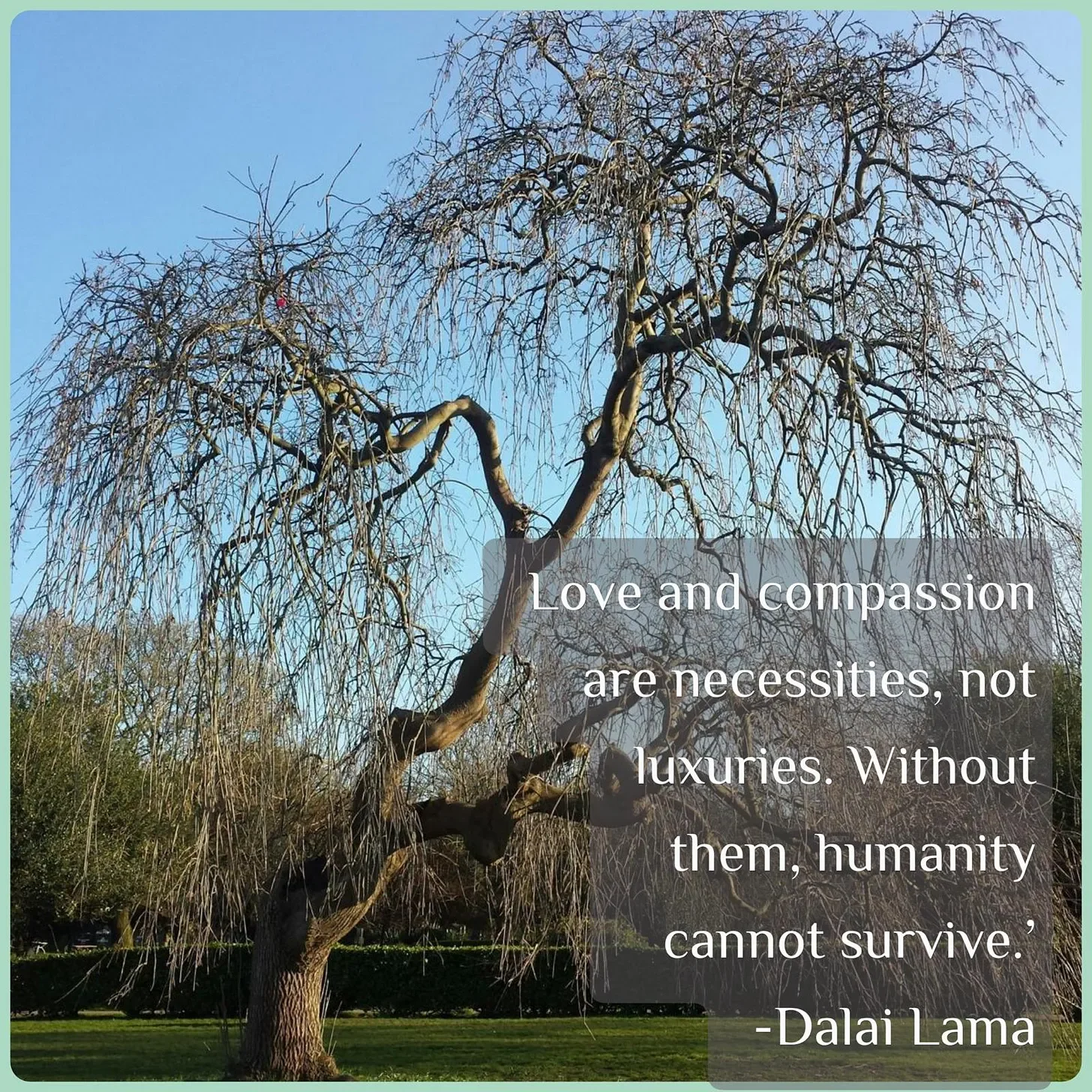
Willow, Farnham, England
A human journey involves walking through some rings of fire, where we have to face these particular sets of challenges connected with these survival strategies, and that on the other side of these rings of fire are more mature virtues of ourselves, with greater capacities for the virtues of each point on the enneagram. The willow, in its own way, seems to model this passage: rooted in water, shaped by the elements, bending without breaking. It does not resist the conditions of its life, but nor does it disappear within them. Instead, it becomes a place where others can rest, be held, and recover. In the same way, the 946 pattern invites a movement from unconscious endurance of suffering into a conscious capacity to accompany it — in ourselves and in others, without losing our own centre.
Here is Goodnews on the way that his experiences have shaped his life and his purpose:
“There is no profound knowing of the self without experiencing and embracing the trauma that takes you there.
It’s about saying, how do you use the awareness of the self that comes from a different place, that doesn’t come from a good experience, that comes from pain?
It comes from trauma, and then it magnifies the purpose that you have derived from that.
My personal purpose as a seeker that is compassionate, comes from realisation of or recognition of the trauma that I have suffered, which then calls upon me to offer compassion at the forefront of my practice, of my work”.
To “suffer with” is not to be overwhelmed, nor to be sucked into another’s experience, but to remain present at the threshold where self and other meet. This is the deeper invitation held within both the willow and this tritype: to allow the sensitivity of the nine, the depth of the four, and the awareness of the six to mature into something steady, relational, and life-giving. When these qualities are integrated, compassion becomes less a reaction and akin to the way way of being Goodnews was describing. It is something that can offer shelter, like the willow’s canopy, while still rooted in the ground of one’s own experience. The image of Guanyin returns to us with new meaning: the willow branch not only as a symbol of healing, but as a reminder that true compassion is both resilient and responsive, shaped through the fires we have been willing and able to walk through.
You can read more of these enneagram tree-type posts on my Substack.
Notes.
Image from the British museum, with the following annotation:
Painting of a standing Avalokiteśvara with a small Amitābha figure on his headdress, holding a willow branch, with swastikas on his palms. In very naive style, probably a child’s painting (the artist perhaps showing himself at the bodhisattva’s side). Ink and colour on paper.
Production date
851-950 (circa) - Tang Dynasty
Your tritype describes a stategy for each centre of intelligence. It is as though your core personality is supported by two further subpersonalities that better decribe how you navigate themes dealing to their centre. (If you would like to go deeper into this theme read here )
Katherine Fauvre is at
https://www.katherinefauvre.com